Tuesday, 6 May 2014

Once and Future Arthurs - Arthurian Literature for Children

Anna Caughey gives a lecture at the Bodleian Library looking at the varying spectrum of literature about King Arthur written for children.

Wednesday, 2 April 2014

Alf Prøysen and Mrs Pepperpot (1956)


Our tour of Scandinavia continued with a trip to Norway and a look at the Mrs Pepperpot books by Alf Prøysen. Mrs Pepperpot is a little old lady who is prone to unexpectedly shrinking to the size of a pepperpot (though in the original she is called Teskjekjerringa - the teaspoon lady). When she is small Mrs Pepperpot can talk to animals, which often help her to escape scrapes and adventures.

Several members of the reading group were familiar with the Mrs Pepperpot books, but none of us had realised the extent of Prøysen's celebrity in his native Norway.  In addition to writing a great many stories, Prøysen was also a folk singer and playwright; a familiar character on Norwegian radio and television.


We all enjoyed our time spent with Mrs Pepperpot and her sometimes grumpy, pancake-guzzling husband. The illustrations by Björn Berg, who also illustrated Astrid Lindgren's Emil books, were an added delight.


Finally, Isabelle drew our attention to the phenomena of  "shrinklit" - books about shrinking and tiny people.  Classics include The Borrowers by Mary Norton, Alice in Wonderland by Lewis Carroll, Tom Thumb and Thumbellina. More recent examples include The Carpet People by Terry Prachett and Toby Alone by Timothée de Fombelle.

Thursday, 23 January 2014

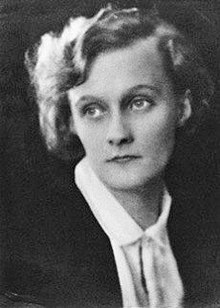
Astrid Lindgren

 
Our January meeting explored the work of Astrid Lindgren, deliberately looking at books other than her well-known series about Pippi Longstocking.

Pippi är starkast i världen

Isabelle unearthed some fascinating background on Lindgren's life, in particular her startling decision in 1926 to bring up her first child as a single mother in Stockholm, rather than marrying the child's father and settling for a respectable life in Vimmerby (near where she was born). Lindgren eventually married in 1931 and had a second child. The Astrid Lindgren website has a host of information and excellent photographs, as well as an overview of Lindgren's writing.

Lingren campaigned for human rights and animal rights and her name has been given to and International prize for children's literature: the Astrid Lindgren Memorial Award.

The book group's reading ranged across Lindgren's gentle writing for younger children, including the Emil stories and The Bullerby Children, to the more fantastical Ronia, the Robber's Daughter and The Brothers Lionheart.


The overall response was very positive, though Pat wasn't quite sure about the tone of The Brothers Lionheart - a philosophical fantasy story about what happens to two brothers after they have died.

Lisa read The Bullerby Children in its German translation. She had this to say about it:

"It’s about 6 children who live in a tiny hamlet and is told from the point of view of Lisa (good name!). She relates the little ups and downs of a secure childhood – how her parents secretly refurbished a room in their house formerly occupied by an elderly relative and presented the results as a birthday present; how she and the two sisters next door devised a messaging system via their bedroom windows; the birthday party; all 6 children playing ball in the street… It is all charmingly told with a delightful atmosphere of contentment and innocence. The children delight in everything from playing harmless tricks on each other to helping the adults harvest beets to earn a little pocket money (which Lisa uses to buy a kitten).

I would be interested to know if anyone has read this book in English and whether it has an English atmosphere about it. The gentleness of the “adventures” convey an atmosphere of German childhood that I have detected in German-authored books – and wonder if it is something that the translator has brought to the text or whether it is something Lindgren managed to convey (it could be a northern European atmosphere of childhood, for example, or be an atmosphere pertaining to a particular era, I don’t know… and I don’t read Swedish, so I can’t compare it with the original version!)"

Having read some of the Bullerby stories they don't feel at all English, so maybe it is a northern European atmosphere that is shared between German and Scandinavian stories. You can read an excellent blog post about the stories and their background here.

Other  group members read and enjoyed Ronia, the Robber's Daughter. I am biased about this book: I bought it from the Puffin Book Club when I was about 8 or 9, and it became one of my favourite books. I read it numerous times and spent ages staring at the cover image, wishing I could be Ronia and have all her adventures in the forest.
 
However, with an impartial opinion, Jenny had this to say:

"I have finished Ronia and thoroughly enjoyed it. I read and re-read the Pippi Longstocking series when I was little and have always seen her as the ultimate feminist icon. She is feisty and independent and not afraid to be herself... I was curious about Ronia but also a bit nervous as to whether she would compare to Pippi. I'm glad to say they are equals!

I found all the characters to be compelling... It was very well paced and packed a lot in... I liked the introspective moments where the characters tried to make sense of their feelings and thoughts. 

The focus on nature and the seasons reminded me of Moominland Midwinter... The way death was dealt with was interesting... Scandinavian children's fiction seems not to shy away from serious issues, even with young children. There is death and danger (the harpies, etc) and we must face them head on, rather than shy away or deny them altogether..."

There are, and have been, whole books to be written on Astrid Lindgren, her life and her works and her influence on Scandinavian society, so I will stop this post here.

Overall, the view of the book group was that Pippi is excellent, but there is more to Astrid Lindgren's work that is worth exploring.

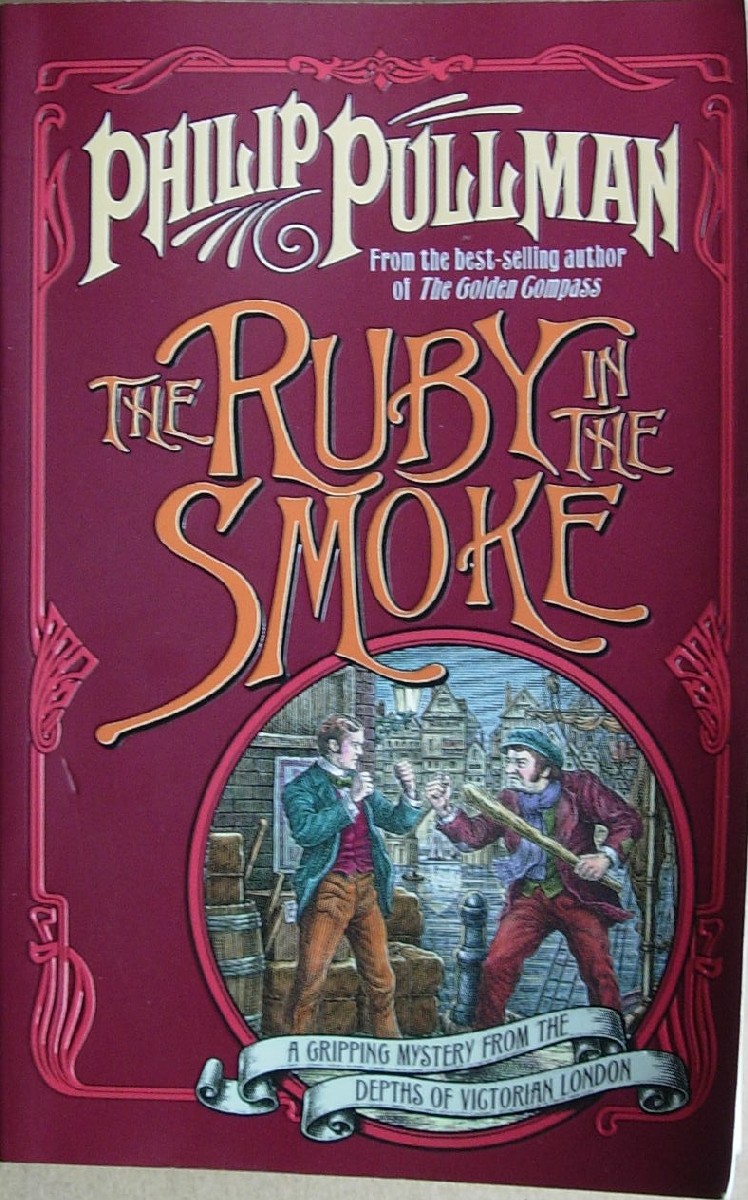
The Ruby in the Smoke by Philip Pullman (1985)

For our December book we turned to a Dickensian story in the form of The Ruby in the Smoke by Philip Pullman.
The first of a series, it tells the story of Sally Lockhart - a young woman whose father has just died and who suddenly finds herself caught up in a mystery involving a ruby and the sins of the British Empire.

Sally is as strong and as capable a female central character as you're likely to meet in a children's book.

Go here to read the opening paragraph, and see how skillfully Pullman hooks in his readers...

The first two books of the series were adapted by the BBC, with The Ruby in the Smoke airing back in 2006. Starring Billie Piper, it also featured a young Matt Smith as Jim.

This book was enjoyed by everyone in the group. Some of us re-read it with pleasure, while new readers found it gripping and moved on to the next books in the the series.  Readers compared the books to Charles Dickens, Anthony Trollope and Arthur Conan Doyle, while Isabelle noted the strong reference to Wilkie Collins' The Moonstone.

Although the plot is deliberately melodramatic and Pullman's lingering teacher's habit of informing his readers about hidden truths and injustices sometimes shows through, he is such an excellent storyteller, and his characters so likable (and despicable) that you can't help being swept along by the narrative.

Perfect fireside reading.

Tuesday, 14 January 2014

Scandinavian Children's Literature


What the Scandinavians Know about Children's Literature

First broadcast: BBC Radio 4, 26 Mar 2012
Duration:28 minutes
 
From the super-human strength of Pippy Longstocking by Swedish author Astrid Lindgren to the strange Finnish animals dreamt up by Tove Jansson in the Moomin stories, and the anarchic Wild Baby created by Barbro Lindgren and Eva Eriksson, Scandinavian children's literature 'punches above its weight' in terms of worldwide sales.  Why is that, and why does it have a particularly unique voice?
 
It began with probably the best known storyteller for children - Hans Christian Andersen - and continued with the work of Elsa Beskow, the Swedish Beatrix Potter.  It's still alive today in the books of authors like Gro Dahle.

According to Professor Maria Nikolajeva, a senior editor for the Oxford Encyclopaedia of Children's Literature, Scandinavian books are not rooted in the world of fantasy, like other children's stories, but are often grounded in a slightly skewed reality in which the childlike characters exhibit 'magical' talents. She claims that the Scandinavian culture of respect for the child, the history of the region and those long winters have all had a profound effect on the character of its literature.

Wednesday, 4 December 2013

The Wool Pack by Cynthia Harnett (1951)

Cynthia Harnett is one of the most elusive authors we've encountered so far in our book group. In spite of a good deal of online digging by Isabelle, very little about Harnett's personal biography can be found.

While the personal details discovered were slight (born 1893 in London, studies at Chelsea School of Art, died 1981), there was a good deal of discussion about her work.

Harnett's early publications were collaborations with George Vernon Stokes. Focused on the subjects of dogs and the countryside (and sometimes both). Titles included "In praise of Dogs" (1936) and Junk the Puppy (1937).
Harnett is, however, best known for her six historical novels, written between 1949 and 1971.

Our group read "The Wool Pack", which won the Carnegie Medal for best children's book in 1951. Set in the fifteenth century Cotswolds, this book gives a beautifully researched and elegantly written insight into the lives of wool merchants and country people of the time (with some skullduggery, smuggling and double-crossing thrown in for entertainment).

All members of the book group thoroughly enjoyed the book, enjoying Harnett's prose and the sense of immersion in another time. Harnett's exquisite line drawings which illustrate her books are an added bonus, and were remarked on by all the readers.
The only faint reservation about the story was that it was rather slow to start, but picked up substantially in the second half, and left us wishing for more when we reached the end.
Karen, a long time fan of Harnett's writing, recommended "Ring out Bow Bells" as a pacier, more dynamic story. Having followed up her recommendation I'd agree, and would definitely suggest "Ring out Bow Bells" or "Stars of Fortune" as a starting point for Harnett's work. Both these stories hit the ground running in terms of plot, and also demonstrate Harnett's strength in exploring the dynamics that exist between a group of siblings. Each child in the family group is distinctive, and the tensions between the loyalties they owe to one another and to the world of adults are skillfully explored.

Notes at the end of each story show the links between the tale and real people and places in history. Harnett was a great researcher. Her attention to detail is lightly held, not intruding on the narrative, but you come away from reading her stories feeling as though you have visited another time and place.

Friday, 15 November 2013

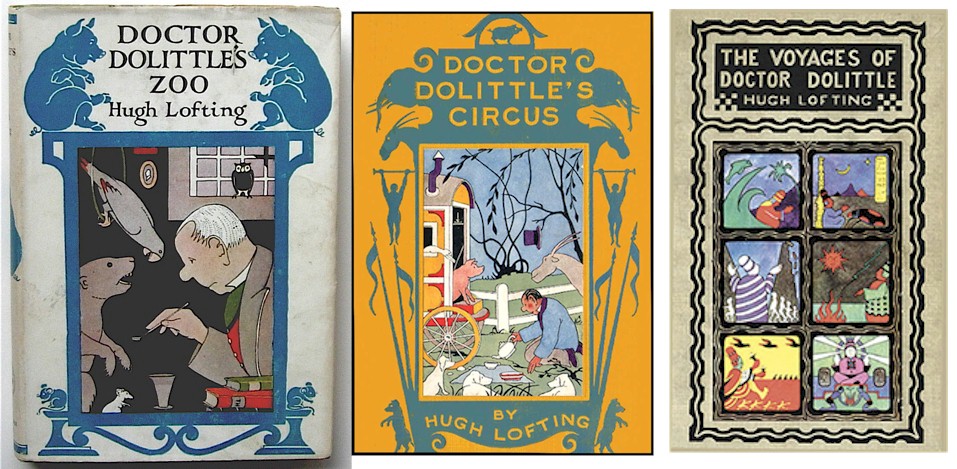
The Story of Doctor Dolittle, Being the History of His Peculiar Life at Home and Astonishing Adventures in Foreign Parts by Hugh Lofting (1920)


We approached our first meeting without Jacqueline with some trepidation. However, Isabelle is doing a brilliant job of running the group and researching the books and authors.

Group members had rather unclear memories of reading Doctor Dolittle as children. I remember looking through the books on the library shelves, and we had all heard Rex Harrisson singing "Talk to the Animals" from the 1967 film of the book - which used nearby Castle Combe as a location - (even if we hadn't seen the film).


None of us, though, were aware of the details of Hugh Lofting's life, in particular his experiences during WWI. Although he was living in New York when the war broke out, Lofting, as a British subject, went to fight in France and Belgium. The brutality in the trenches (to both men and animals) seems to have been key to Lofting's creation of Doctor Dolittle - a man who shuns human society to live with and tend to the needs of animals. More about Lofting's (rather tragic) biography can be found on the Puddleby website.

Our members had a mixed response to reading the books. Many of us were surprised by the length of the later books, while others found the episodic nature of the stories problematic. However, there was general approval of the cosy world Doctor Dolittle had made for himself on the edge of Puddleby-on-the-Marsh. And there was unanimous praise for Lofting's artworks that illustrate the books.

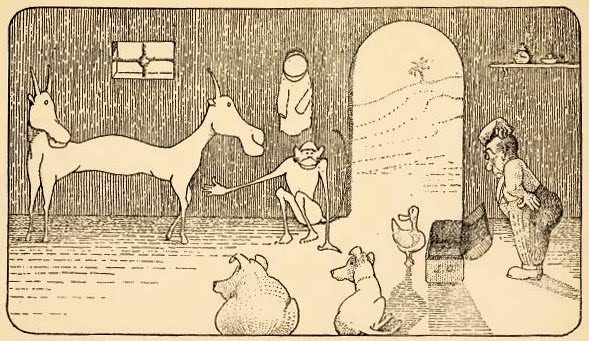
Having all read different books, from different stages of Lofting's writing career, the group's recommendation to anyone new to Doctor Dolittle is to start (sensibly) with the first book The Story of Doctor Dolittle. This compact story introduces the characters, and guarantees a meeting with the most marvellous of creatures - the pushmi-pullyu.
Pushmi-Pullyu, Story of Doctor Dolittle