Showing posts with label Astrid Lindgren. Show all posts

Thursday, 23 January 2014

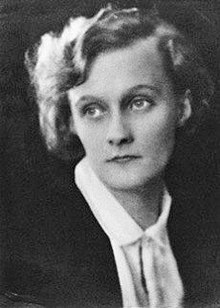
Astrid Lindgren

 
Our January meeting explored the work of Astrid Lindgren, deliberately looking at books other than her well-known series about Pippi Longstocking.

Pippi är starkast i världen

Isabelle unearthed some fascinating background on Lindgren's life, in particular her startling decision in 1926 to bring up her first child as a single mother in Stockholm, rather than marrying the child's father and settling for a respectable life in Vimmerby (near where she was born). Lindgren eventually married in 1931 and had a second child. The Astrid Lindgren website has a host of information and excellent photographs, as well as an overview of Lindgren's writing.

Lingren campaigned for human rights and animal rights and her name has been given to and International prize for children's literature: the Astrid Lindgren Memorial Award.

The book group's reading ranged across Lindgren's gentle writing for younger children, including the Emil stories and The Bullerby Children, to the more fantastical Ronia, the Robber's Daughter and The Brothers Lionheart.


The overall response was very positive, though Pat wasn't quite sure about the tone of The Brothers Lionheart - a philosophical fantasy story about what happens to two brothers after they have died.

Lisa read The Bullerby Children in its German translation. She had this to say about it:

"It’s about 6 children who live in a tiny hamlet and is told from the point of view of Lisa (good name!). She relates the little ups and downs of a secure childhood – how her parents secretly refurbished a room in their house formerly occupied by an elderly relative and presented the results as a birthday present; how she and the two sisters next door devised a messaging system via their bedroom windows; the birthday party; all 6 children playing ball in the street… It is all charmingly told with a delightful atmosphere of contentment and innocence. The children delight in everything from playing harmless tricks on each other to helping the adults harvest beets to earn a little pocket money (which Lisa uses to buy a kitten).

I would be interested to know if anyone has read this book in English and whether it has an English atmosphere about it. The gentleness of the “adventures” convey an atmosphere of German childhood that I have detected in German-authored books – and wonder if it is something that the translator has brought to the text or whether it is something Lindgren managed to convey (it could be a northern European atmosphere of childhood, for example, or be an atmosphere pertaining to a particular era, I don’t know… and I don’t read Swedish, so I can’t compare it with the original version!)"

Having read some of the Bullerby stories they don't feel at all English, so maybe it is a northern European atmosphere that is shared between German and Scandinavian stories. You can read an excellent blog post about the stories and their background here.

Other  group members read and enjoyed Ronia, the Robber's Daughter. I am biased about this book: I bought it from the Puffin Book Club when I was about 8 or 9, and it became one of my favourite books. I read it numerous times and spent ages staring at the cover image, wishing I could be Ronia and have all her adventures in the forest.
 
However, with an impartial opinion, Jenny had this to say:

"I have finished Ronia and thoroughly enjoyed it. I read and re-read the Pippi Longstocking series when I was little and have always seen her as the ultimate feminist icon. She is feisty and independent and not afraid to be herself... I was curious about Ronia but also a bit nervous as to whether she would compare to Pippi. I'm glad to say they are equals!

I found all the characters to be compelling... It was very well paced and packed a lot in... I liked the introspective moments where the characters tried to make sense of their feelings and thoughts. 

The focus on nature and the seasons reminded me of Moominland Midwinter... The way death was dealt with was interesting... Scandinavian children's fiction seems not to shy away from serious issues, even with young children. There is death and danger (the harpies, etc) and we must face them head on, rather than shy away or deny them altogether..."

There are, and have been, whole books to be written on Astrid Lindgren, her life and her works and her influence on Scandinavian society, so I will stop this post here.

Overall, the view of the book group was that Pippi is excellent, but there is more to Astrid Lindgren's work that is worth exploring.

Tuesday, 14 January 2014

Scandinavian Children's Literature


What the Scandinavians Know about Children's Literature

First broadcast: BBC Radio 4, 26 Mar 2012
Duration:28 minutes
 
From the super-human strength of Pippy Longstocking by Swedish author Astrid Lindgren to the strange Finnish animals dreamt up by Tove Jansson in the Moomin stories, and the anarchic Wild Baby created by Barbro Lindgren and Eva Eriksson, Scandinavian children's literature 'punches above its weight' in terms of worldwide sales.  Why is that, and why does it have a particularly unique voice?
 
It began with probably the best known storyteller for children - Hans Christian Andersen - and continued with the work of Elsa Beskow, the Swedish Beatrix Potter.  It's still alive today in the books of authors like Gro Dahle.

According to Professor Maria Nikolajeva, a senior editor for the Oxford Encyclopaedia of Children's Literature, Scandinavian books are not rooted in the world of fantasy, like other children's stories, but are often grounded in a slightly skewed reality in which the childlike characters exhibit 'magical' talents. She claims that the Scandinavian culture of respect for the child, the history of the region and those long winters have all had a profound effect on the character of its literature.

Sunday, 6 May 2012

May 2012: Gabrielle Zevin's "Elsewhere" and our June books

We took a break for school holidays in April, and were delighted to get back together this month with coffee, biscuits and two new members, ready to explore Elsewhere.  American author, screenwriter and Harvard English Literature graduate Gabrielle Zevin’s prize-winning debut novel for teenagers made the Carnegie long list in 2005, but was new to most of us.  It tells the story of fifteen year old Liz who is killed in a bicycling accident and wakes up on a cruise ship bound for the afterlife in Elsewhere – a place that seems just like the suburban American she inhabited in life, but with observation decks where she can watch her grieving family and friends through binoculars.  Liz learns that everyone in Elsewhere ages backwards until they are seven days old, when they are placed in the river and return to Earth, reincarnated into a new life.
Elsewhere is an interesting idea, and it was a simply written and sometimes compelling read (“candyfloss” for some), but sadly it wasn’t a book that any of us enjoyed wholeheartedly, with so many loose ends, tangles and gaping plot holes it’s difficult to know where to begin!  “I kind of liked it”, and “Unsatisfactory” were two comments that sum up how we felt.  Zevin seemed to have started on a promising concept that she’d found increasingly difficult to manage until (about two thirds of the way through) she’d simply thrown in the towel and stumbled to the finish, coming down all of an untidy heap.  Her editor must take some of the blame: the book was snapped up for publication – perhaps because the idea was so unusual and the teen appeal so obvious that finessing the plot and ironing out the anachronisms went by the board.
We enjoyed the Prologue voiced by Liz’s pug dog Lucy, and the interesting use of the present tense (a current vogue in children’s literature); also the symbolism of water and ships.  Reflecting the author’s background, the novel does have a filmic quality, but some questioned her rather heavy-handed approach to literary references – Shelley’s Ozymandias and E B White’s Charlotte’s Web amongst them.  Using binoculars to observe those still alive was reminiscent of The Truman Show (1998), while others mentioned similarities with the adult stories The Curious Case of Benjamin Button (F Scott Fitzgerald, 1922) and The Time Traveler’s Wife (Audrey Niffenegger, 2003). Another children’s book that deals unremittingly with the afterlife is The Brothers Lionheart by Astrid Lindgren (1973). 
"Contrived", "trite" and "lacking in any sense of consequences for one’s actions": you can tell that Elsewhere hasn’t tempted us to read anything else by Gabrielle Zevin.
Next month we are dipping into the Scandinavian genre and reading two books by the same author: one written for children and a semi-autobiographical novel for adults.  Both are by the Finnish writer and artist, Tove Jansson: Moominland Midwinter (1957) – the fifth in her famous Moomins series for children – and The Summer Book (1972).